Free tool · Open source · MIT
medet.ink: security reports as beautiful as the work
medet.ink is an HTML report template for security consultancies, internal red teams and enterprise security professionals: a report written in HTML and CSS, read in a browser, interactive where it helps, and printed to a pixel-perfect landscape PDF with the browser’s own print command. The format our own reports and letters use.
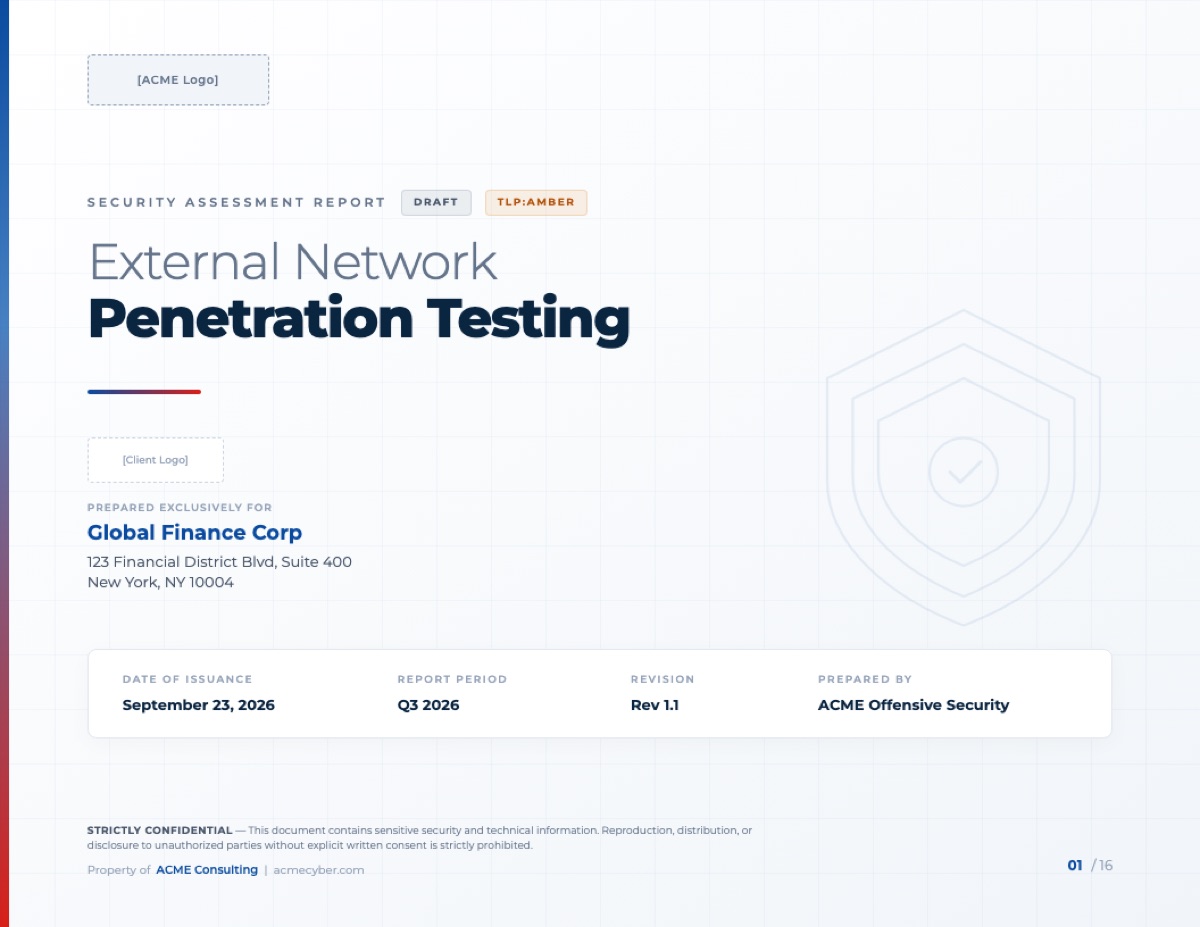
A security report has two readers at once: the executive who decides and the engineer who fixes. The template is laid out for both. Sixteen pre-formatted pages cover the cover, the table of contents, the executive summary, the maturity position, scope and methodology, the risk matrix, testing phases, the findings overview, detailed findings with their radar and risk score, proof-of-concept pages, overviews of vulnerabilities and exploitability, and the capability statement.
Charts are drawn in inline SVG with no library to load or license, and a Chart.js radar carries the business impact, exploitability and effort of each finding. Printing is engineered with @media print rules so the browser’s Save as PDF gives a one-to-one translation: landscape pages, no margin degradation, no layout breaks. There is no build pipeline and no proprietary software: a text editor and a browser are enough to edit, preview and deliver.
The template is downloaded as a zip from the landing page or cloned from the repository; the combined report is one HTML file to populate with the assessment’s data, branding and metrics. Maintainers who regenerate the sample PDF or the gallery, or run the verification suite, use Python and Playwright; the template itself needs nothing beyond a browser.
Every report N30 delivers is built on this format, and the three anonymized samples on this site are the proof: the Azure assessment, the web application penetration test and the WISP report to the board were all written as medet.ink pages, probed for overflow page by page, and printed to the PDFs you can download.
Screens
Taken from the tool itself, as it runs.
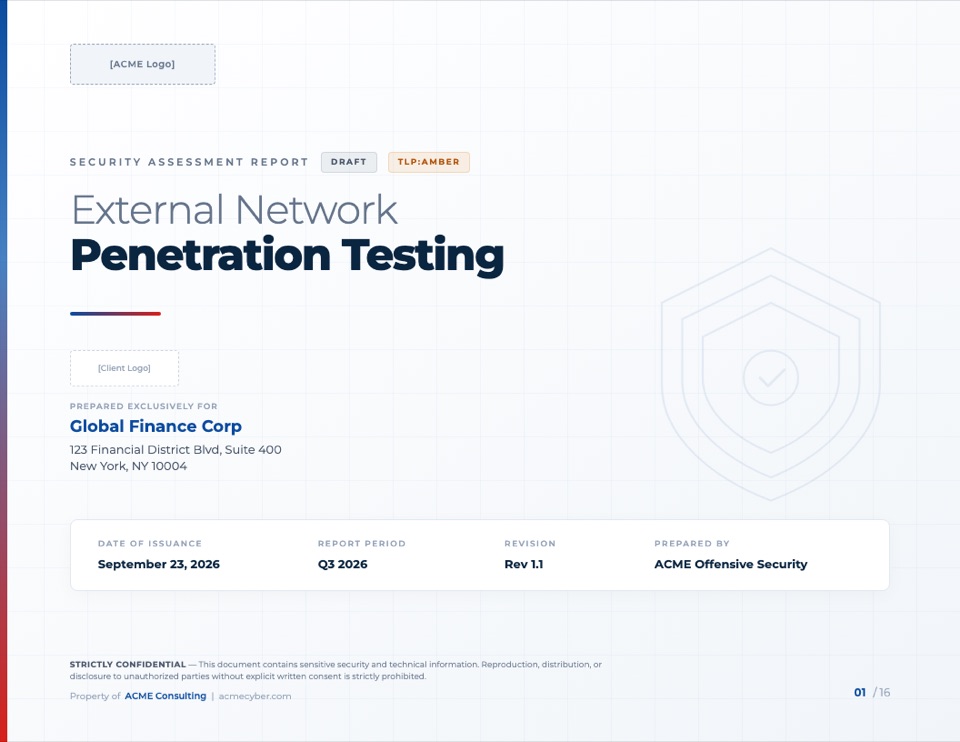 The cover page
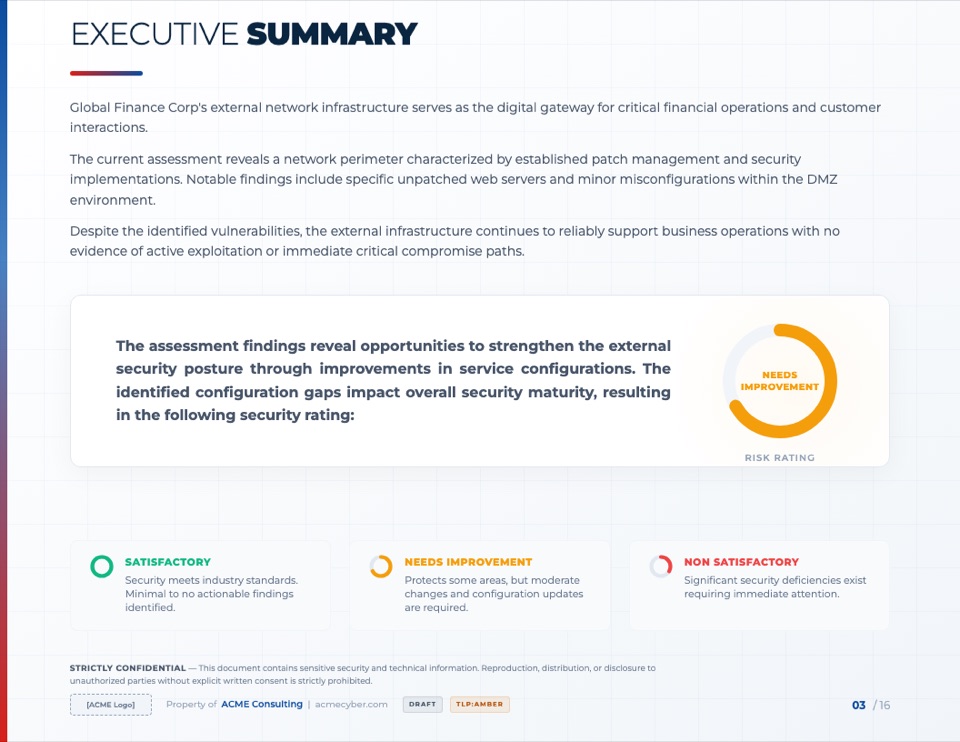 The executive summary: the rating and the one change that matters
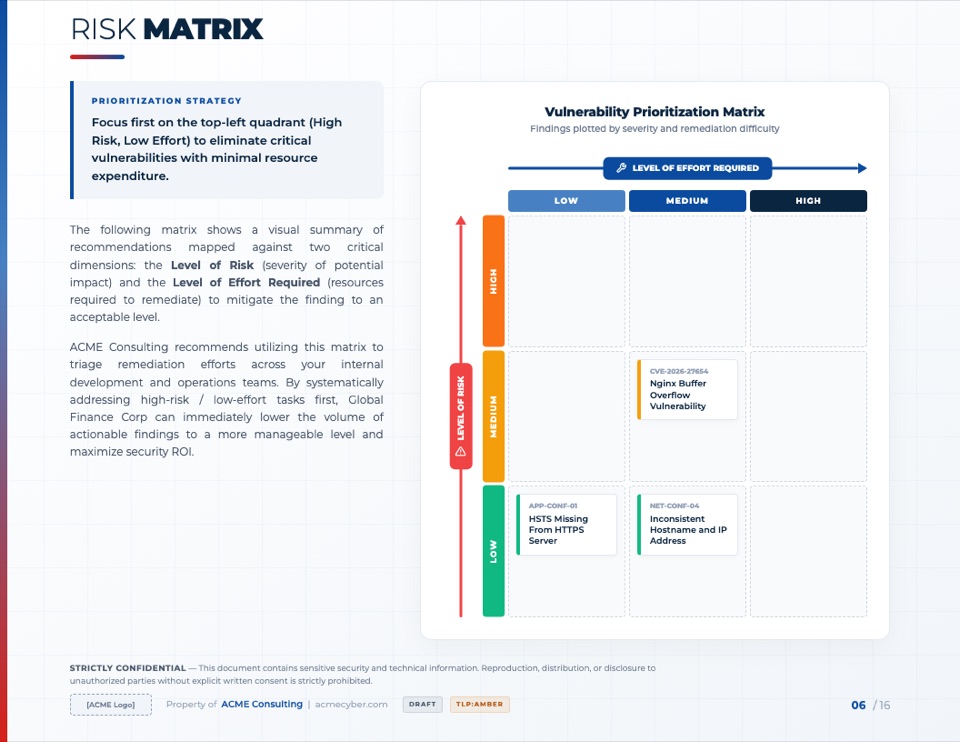 The risk matrix: severity against effort to fix
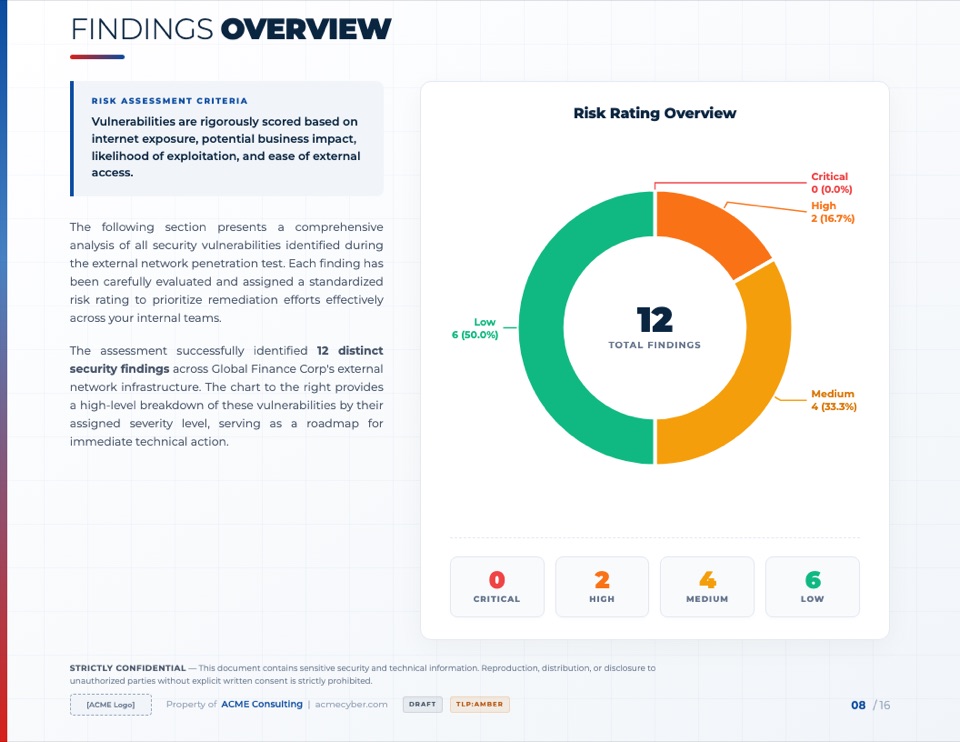 The findings overview by severity
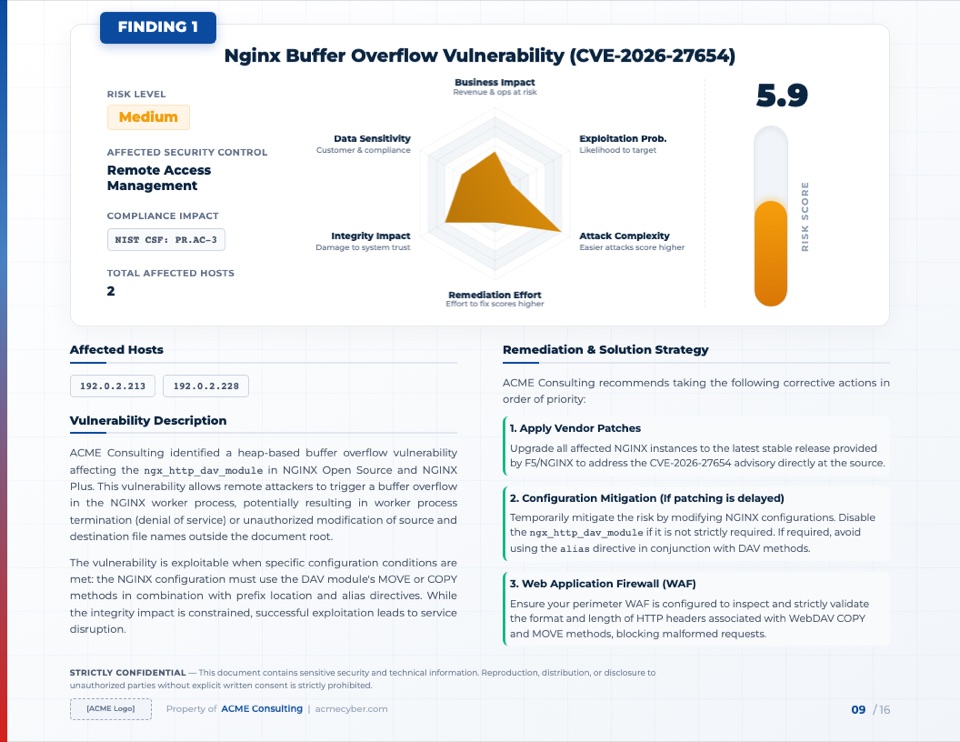 A finding: routes, radar, risk score, remediation
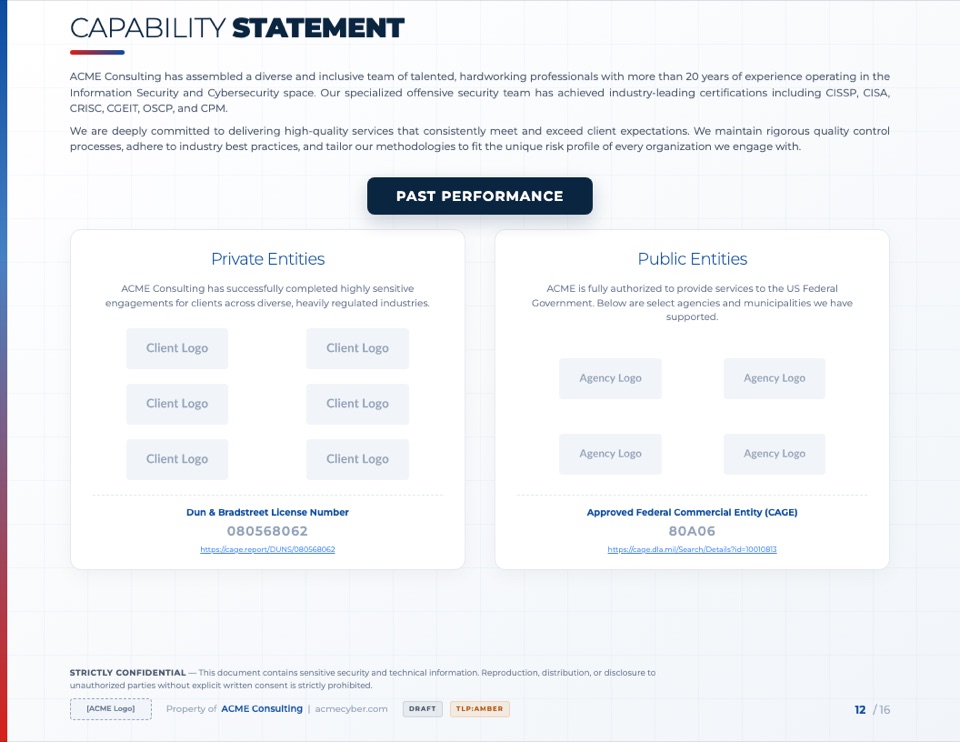 The capability statement